The term “classical music” often evokes the polished atmosphere of a concert hall and an orchestra performing long symphonies. Yet composers have frequently drawn inspiration from folk traditions — from their melodies, rhythms, and the very spirit of rural life.
In our musical gatherings, we journey from the drama of the Baroque through the vitality of Romani music, the tenderness of Romanticism, and on to the rhythmic charm of chanson. There is also room for the freshness of Classicism, inspired by Joseph Haydn and his engagement with Romani musical influences.
This musical spectrum is not merely a relic of the past, but a living and evolving force that continues to inspire new generations.
Whether you are a devoted listener of classical music or your heart beats for folk traditions, we invite you to a musical encounter where these two worlds meet in a unique and compelling dialogue.
- Traditional: Vojake Sheja
- Antonio Vivaldi: La follia, Trio Sonata in D minor, Op. 1 No. 12
- Joseph Haydn: Piano Trio in G major, Hob. XV:25 (Andante; Rondo all'Ongarese: Presto)
- Reinhold Glière: Intermezzo, Tarantella, Op. 9
- Zoltán Kodály: Kállai kettős, K. 148 (arr. MusEquality)
- Traditional: Sarba de concert (arr. for solo cimbalom by Marcel Comendant)
- Tony Muréna: Indifférence
- Béla Bartók: Romanian Folk Dances, Sz. 56, BB 68
- Antal Béla Babai: Caprice tzigany in A flat minor
A Baroque master collecting folk melodies on his travels through Poland and Moravia; an Argentinian rebel who restored a sense of depth to the dance hall; a Romanian villager whose tune Bartók transformed into a symphonic work. Each of them heard something that transcended their own era — something that continues to resonate today.
The programme begins almost behind the scenes. Two violinists enter already playing, as if the music had been unfolding long before the first official note of the concert. One by one, the other musicians join them, and what begins as an intimate dialogue gradually expands into a full ensemble.
Georg Philipp Telemann is widely known as a master of the Baroque, yet it is less often remembered how deeply he was inspired by Polish and Moravian folk music — one of the reasons MusEquality has chosen to include him. Dvořák's Bagatelles offer a moment of stillness. He never directly quoted folk songs nor imitated their melodies, yet his music sounds unmistakably Czech — as though he were not describing the landscape, but allowing it to sing in its own voice.
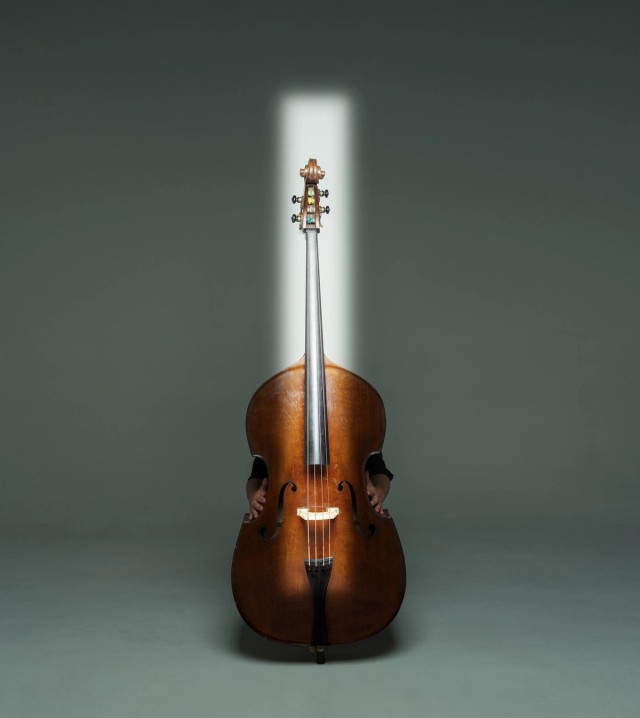
After the interval, the energy shifts. Wieniawski's Scherzo-Tarantelle is heard here in an arrangement for cimbalom — an instrument that deserves far more than a purely folkloric role. In this setting, it stands confidently as a fully fledged solo voice in any genre. A similar intention lies behind Míšek's Sonata for double bass: the instrument is a rare solo presence on the concert stage, despite the wealth of remarkable repertoire written for it, particularly in the Czech lands.
Bartók's Divertimento brings the programme towards its close with a spirited rondo, in which soloists and ensemble pass musical ideas back and forth like an animated conversation — at moments, it is as if Handel himself had been drawn into a gypsy dance. The evening concludes with Vladigerov's Bulgarian Rhapsody “Vardar”, a work of vibrant southern energy, where folk elements are set within a virtuosic and unrestrained musical language.
- György Ligeti: Concert Romanesc
- Antonín Dvořák: Bagatelles, Op. 47
- Adolf Míšek: Sonata No. 2 for Double Bass and Piano in E minor, Op. 6 (I. movement)
- Pancho Vladigerov: Bulgarian Rhapsody “Vardar”, Op. 16
- Henryk Wieniawski: Scherzo-Tarantelle, Op. 16
- Astor Viazzolla & Antonio Pivaldi: The Four Seasons (arr. MusEquality)
MusEquality's unique educational concerts bring together classical and folk music in an engaging and meaningful way.
The programme is designed for pupils at both primary and secondary levels, as well as students of art schools. Through an interactive and captivating format, it introduces not only these musical genres — classical and folk — but also the instruments themselves and important themes such as equality, respect, and collaboration.
In our interpretation of classical music, we draw inspiration from the deep roots of the folk traditions of Moravia and Slovakia, where we were raised. Our artistic journey has since broadened through the study of classical music and the exploration of connections between folklore and other musical genres. Alongside performing, most of us are also actively engaged in music education, and we collaborate with the Czech Philharmonic's Education Centre.
The main motivation behind this educational programme is to bring classical music closer to young audiences, while highlighting its foundations in traditional folk music. Folk music — the most authentic and deeply rooted expression of culture — forms the very basis from which classical music has grown. We aim not only to demonstrate this relationship, but also to convey the values shared by both traditions. We believe that our concerts can enrich students' musical and personal development, inspiring a deeper understanding of music and its connection to emotion and culture.
What happens when classical virtuosity meets the raw, instinctive energy of folk tradition? Can the cimbalom hold its own in music from the turn of the 17th and 18th centuries? And is it possible to bridge the worlds of village dance and courtly society? Dance Among Us sets out to explore these questions through a unique fusion of music and movement.
The term “classical music” often conjures up images of refined concert halls and orchestras performing grand symphonies. Yet composers have long drawn inspiration from folk traditions — from their melodies, rhythms, and the vitality of rural life. Dance Among Us invites audiences into moments where these two worlds meet, intertwine, and enter into a compelling dialogue.
- Traditional: Dance Tunes from the Uhrovec Collection (1730)
- Antonio Vivaldi: La follia, Trio Sonata in D minor, Op. 1 No. 12
- Joseph Haydn: Piano Trio in G major, Hob. XV:25 (Andante; Rondo all'Ongarese: Presto)
- Reinhold Glière: Tarantella, Op. 9
- Traditional: Sârba de concert (arr. Marcel Comendant)
- Béla Bartók: Romanian Folk Dances, Sz. 56, BB 68
- Zoltán Kodály: Kállai kettős, K. 148 (arr. MusEquality)
- Tony Muréna: Indifférence
- Concept:
- MusEquality, Laura Kolačkovská
- Music:
- MusEquality
- Choreography:
- Kristína Kordošová, Laura Kolačkovská, Silvia Nemcová
- Costume Design:
- Klára Lustyk
- Dancers:
- Adam Šindler, Dana Rokyta, David Tari, Eduard Ungvarský, Laura Kolačkovská, Lucia Micháliková, Lukáš Blažek, Silvia Nemcová, Tomáš Kolomazník, Veronika Holecová